10 Skool Communities Trending in September 2026
Snapshot taken from Skool Discovery on 15 September 2026.
Skool's Trending page is an odd mix.
When we took our September snapshot, a $9-a-month community with almost 28,000 members was sitting alongside a $289-a-month SEO community with just 355. Eight of the Top 10 had a perfect 5.0 rating. On the surface, that doesn't tell you very much.
So we went past the stars.
For each Trending community, we read up to 30 of its most recent member reviews, looked at how long those reviewers had been paying, whether they were still paying, what they repeatedly praised, what they criticised, and what results they said they had achieved. For Maker School, we went further and analysed all 92 reviews available at the time.
What stood out wasn't just which communities were trending, but what their members actually said about them.
The result is a much more interesting picture than the leaderboard alone.
On this page
The September Trending Top 10
| # | Community | Members | Price | Rating | Reviews |
|---|---|---|---|---|---|
| 1 | Maker School: AI Automation | 2.5K | $184/mo | 5.0 | 92 |
| 2 | AI Video Bootcamp | 27.9K | $9/mo | 4.9 | 220 |
| 3 | AI Profit Boardroom | 3.5K | $69/mo | 5.0 | 82 |
| 4 | Disrupter Academy | 1.3K | $29/mo | 5.0 | 15 |
| 5 | Origins Ecommerce | 1.7K | $98/mo | 5.0 | 70 |
| 6 | AI SEO RAINMAKERS | 355 | $289/mo | 5.0 | 31 |
| 7 | AI Automations by Jack | 3.4K | $87/mo | 5.0 | 86 |
| 8 | The 1550+ Formula | 1.1K | $99/mo | 5.0 | 39 |
| 9 | Viral You: Organic Growth | 296 | $197/mo | 5.0 | 12 |
| 10 | Claude Code Club | 8.3K | $9/mo | 4.9 | 106 |
Prices, membership numbers, ratings and review counts are those displayed when we took our snapshot and can change.
How we read the reviews
For each community, we analysed up to 30 of the most recent member reviews available on 15 September 2026. Where there were fewer than 30, we analysed all of them.
Maker School was the exception: we analysed its complete set of 92 reviews.
We also used the membership information Skool displayed alongside the reviews, including whether a reviewer was still paying and how long they had been paying.
That gives useful context, but it needs to be read carefully. A long membership can be a strong signal for an ongoing business community, while a short membership in something like SAT preparation may simply mean the student took the exam and no longer needed it.
Where reviewers mention revenue, score improvements, clients, engagement growth or other results, those are claims made by individual reviewers. They have not been independently verified by Skool Build.
With that out of the way, here's what we actually found.
1. Maker School: AI Automation

2.5K members · $184/month · 5.0 from 92 reviews
Maker School was the community where reading only the first handful of reviews would have given us the wrong picture.
An early look suggested that its longest visible paying member had been there for 23 months. Once we analysed the complete 92-review set, we found members at around the two-year mark, several around 20 months, and others at 18 and 19 months.
That's unusually useful evidence because it moves the story beyond launch enthusiasm. People weren't simply joining, enjoying week one and leaving a five-star review. Some had continued paying $184 a month for a long time.
But longevity wasn't the only thing that kept appearing.
Reviewers repeatedly mentioned Nick Saraev being personally involved, answering questions and helping members rather than disappearing behind a course library. They also talked about accountability, templates, client acquisition and an emphasis on actually doing the work.
That last part matters. The reviews make Maker School sound less like “learn some AI tools” and more like use AI automation to build something somebody will pay you for.
There were also a striking number of concrete business-result claims. Reviewers talked about landing first clients, increasing retainers, starting agencies, recovering the cost of membership and increasing revenue. Some of the numbers were substantial.
Those are reviewer-reported outcomes, not results we can verify or assume a new member will reproduce. But the type of feedback is revealing: members repeatedly judge Maker School in terms of execution and commercial results, not simply how much content is in the classroom.
There were former paying members among the positive reviews too. We don't think that's something to hide. If anything, it makes the review set more useful than a wall of testimonials from people who joined yesterday.
The clearest signal: long membership histories, hands-on creator involvement and a strong “get a client / build the business” orientation.
2. AI Video Bootcamp

27.9K members · $9/month · 4.9 from 220 reviews
AI Video Bootcamp was almost the opposite kind of product.
In our sample of 30 recent reviews, the repeated praise was about the sheer amount of training, easy-to-follow teaching, practical AI-video workflows, challenges and the creative community around them.
People talked about learning tools and workflows they hadn't previously discovered and, importantly, being pushed to actually make things rather than simply watch tutorials.
The membership histories gave the reviews a little more weight than first-week excitement alone. We saw members still paying after four, five, six, seven and nine months. At the time of our snapshot, all 30 reviewers in our sample were shown as still paying.
That doesn't mean all 220 reviewers were retained, and it doesn't mean every paying member was actively using the programme. In fact, one review was useful precisely because the member essentially admitted they had been paying but hadn't really used the material yet.
That's a good reminder that “still paying” and “actively getting value” are not the same thing.
There was also a specific commercial result in the sample: one seven-month member reported landing a $2,000-per-month AI-influencer video retainer. Again, that's the reviewer's claim, not a typical-result promise.
What interested us most was how different the review language was from Maker School despite both sitting near the top of Trending and both operating in AI.
Maker School reviews kept circling back to clients, execution and business outcomes.
AI Video Bootcamp reviews were much more about learning, making, experimenting and belonging to a creative community.
A 5.0 versus a 4.9 tells you none of that.
The clearest signal: enormous perceived learning value for a very low monthly price, with practical creation and community challenges doing much of the work.
3. AI Profit Boardroom

3.5K members · $69/month · 5.0 from 82 reviews
If we had to reduce the AI Profit Boardroom reviews to one recurring idea, it would be access to Julian Goldie.
Again and again, members talked about Julian answering questions himself, replying quickly, recording personalised videos, looking at their setups and helping them troubleshoot.
That's quite different from praising a large course library. The founder's presence appears to be part of the product.
Agent OS / Agentic OS was another recurring thread. Some reviewers seemed to have joined specifically because of it, then discovered value in the wider community.
But this was also one of the first review sets where we started seeing a useful caveat: there can be too much information.
Several reviewers described the amount of material as overwhelming or talked about needing to focus rather than chase every new idea. Most framed that as a good problem to have, but it's still meaningful. “There is so much here” can be praise and a warning at the same time.
The age of the reviews matters too. A lot of the recent reviewers were extremely new — some had been paying for only days. But the sample wasn't entirely launch enthusiasm: we also found members at three, four, six, eight and ten months, plus a former member who had paid for 13 months.
One particularly useful review came from someone who cancelled after seven days. They felt some classroom material was outdated or too basic and that some topics weren't relevant to them — then went on to praise Julian's response and personalised support.
That's the kind of review we find more useful than another perfect star score. It tells you both where the product may not fit and what apparently rescued the experience.
The clearest signal: unusually visible founder access, with Agent OS as a draw and information overload as the recurring caveat.
4. Disrupter Academy

1.3K members · $29/month · 5.0 from 15 reviews
Disrupter Academy only had 15 reviews, so this is a much smaller evidence pool than the communities above it.
But those 15 reviews were surprisingly consistent.
Members repeatedly contrasted Charley Tichenor's Meta advertising teaching with the generic Facebook-ads advice they'd seen elsewhere. The praise wasn't simply “great course.” Reviewers talked about depth, sustainable strategy and, importantly, understanding why Charley was recommending something rather than being handed another set of settings to copy.
That gives the community a very distinct fingerprint: advanced thinking rather than beginner tactics.
The small review pool also contained stronger longevity than we expected. Current paying reviewers included people at 19, 10, 9, 6 and 5 months, among others.
There was a one-day paying reviewer with no written comment too. That's worth remembering when looking at a perfect 5.0: not every star contributes the same amount of evidence.
One reviewer said Charley's teaching had previously helped them win the Skool Games. That's an individual reviewer claim, not something we've independently verified.
What matters more is the pattern around it. People appear to be paying for the thinking behind the advertising, not simply a collection of hacks.
The clearest signal: depth of Meta advertising expertise and a teaching style that explains the reasoning, backed by surprisingly solid tenure for such a small review set.
5. Origins Ecommerce

1.7K members · $98/month · 5.0 from 70 reviews
Origins Ecommerce produced one of the clearest long-term value signals in our sample.
Among the 30 recent reviews we analysed were current paying members at 14, 14, 13, 12, 12, 12, 11 and 10 months, as well as others in the six-to-eight-month range.
At the time of our snapshot, all 30 reviewers in the recent sample were shown as still paying.
Again, that's a snapshot, not a retention-rate calculation. But it is more interesting than seeing a 5.0 beside the community name.
The repeated theme was depth.
Reviewers described the ecommerce training as comprehensive, detailed and useful beyond the beginner stage. Several framed the price as inexpensive relative to the amount or quality of material they believed they were getting. The Avatar Module was specifically praised rather than reviewers talking only in vague terms about “great value”.
There were some large commercial numbers in the reviews too.
One reviewer said they had reached around £170K per month before looking for help evolving further. Another said they had spent more than $10,000 on ecommerce courses and believed Origins contained what someone needed to go from zero to $100K a month.
Those two statements are not the same kind of evidence. The first is a reviewer describing their own business history. The second is an opinion about what the programme could help somebody else achieve.
That's exactly why we don't like flattening reviews into testimonial quotes.
Also worth noting: a number of the 30 were star-only reviews with no written comment. A 5.0 from 70 reviews does not mean 70 equally detailed testimonials.
The clearest signal: unusually strong membership duration combined with repeated praise for detailed, durable ecommerce training rather than quick-win material.
6. AI SEO RAINMAKERS
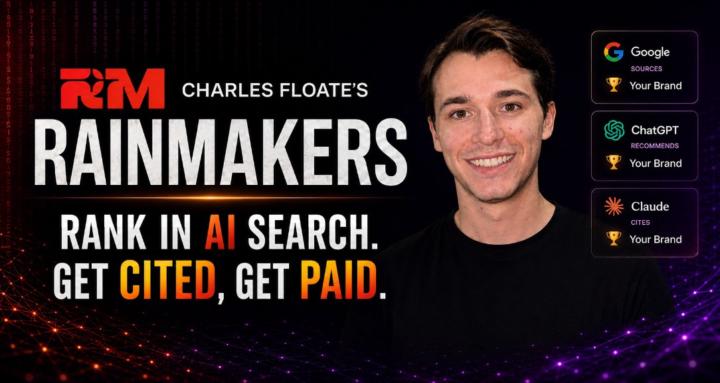
355 members · $289/month · 5.0 from 31 reviews
AI SEO RAINMAKERS is where the age of the reviews completely changes how we read the 5.0 rating.
We analysed 30 of its 31 reviews, so this was effectively the whole picture.
And people clearly liked what they had joined.
Reviewers repeatedly praised advanced SEO material, practical implementation, testing, tools, live site teardowns, weekly calls and direct access to Charles Floate. Several reviewers identified themselves as experienced SEO professionals or agency operators and still described the material as advanced or beyond the usual surface-level SEO content.
That's a stronger signal than beginners simply saying they learned a lot.
Charles's involvement also came up repeatedly: answering questions, interacting personally and staying on calls. By this point in the research, founder presence was becoming hard to ignore as a pattern across the Trending list.
But there is a major qualification.
Almost everyone in the sample had only been paying for roughly 19 to 30 days when we took the snapshot.
One former member had paid for 18 days and still left a positive written review.
So the fair reading isn't “5.0 proves members stay”.
It's: this community generated very strong early enthusiasm among a technically experienced audience, but it was too young for the reviews to tell us much about long-term membership yet.
That's a much more useful conclusion.
The clearest signal: experienced SEO people praising genuinely advanced material and founder access — with a very important “too early to judge longevity” asterisk.
7. AI Automations by Jack

3.4K members · $87/month · 5.0 from 86 reviews
This was the review set that made us think the community itself may be part of the product.
Members didn't only praise Jack Roberts or the training. They repeatedly talked about other members building things, answering questions, sharing expertise and helping one another.
The things being built were practical too: apps, automations, business systems, YouTube workflows and systems designed to save time or change how people worked with AI.
Training depth, live calls and technical support were recurring themes, and Jack was praised for being involved, positive, responsive and continuing to add material.
Then we looked at the membership histories.
Our sample included current paying reviewers at 29 months and 25 months, plus others at 10, 10, 8, 7, 6 and 5 months.
The 29-month reviewer was the longest structured payment-duration signal we encountered in this Trending research.
There were former members too — including people who had paid for five months, three months and, at the other extreme, some very short periods.
One review contained an interesting inconsistency: the reviewer wrote that they'd been involved for “2.5+ years”, while Skool's structured payment metadata showed four months. We used Skool's displayed payment metadata for our tenure analysis rather than trying to reconcile or cherry-pick the wording.
That's another reason raw testimonials need interpretation.
The clearest signal: one of the strongest long-term membership patterns we found, combined with a culture where members appear to be actively building and helping each other rather than simply consuming lessons.
8. The 1550+ Formula

1.1K members · $99/month · 5.0 from 39 reviews
The 1550+ Formula was unlike every business and AI community above it because the reviews contained unusually specific before-and-after SAT scores.
Reviewers reported results including:
- 1300 → 1520
- 1400 → 1540 in one month
- 1450 → 1540
- 1190 → 1530
- a 400-point increase over two months, finishing at 1490
- Math improving from 690 → 790
- another reviewer reaching their target score of 1500
Those are unusually concrete claims.
They are still claims made by reviewers, not score improvements independently verified by Skool Build. But they're much more informative than “this course is amazing”.
Members also praised James Lu's teaching, the focused approach and the community around the programme.
Then there was something that initially looked less positive: this review history contained more former paying members than several of the other Trending communities.
But this is exactly where blindly comparing retention would be misleading.
SAT preparation has a natural endpoint.
If somebody joins, studies for two months, takes the SAT, gets the score they wanted and leaves, cancelling is not necessarily evidence that the community failed. It may be evidence that the job was finished.
That became one of the most useful lessons from the whole exercise: membership duration only means something when you understand what the community is designed to do.
The clearest signal: unusually specific reviewer-reported outcomes, plus a perfect example of why “longer membership = better” is too simplistic.
9. Viral You: Organic Growth
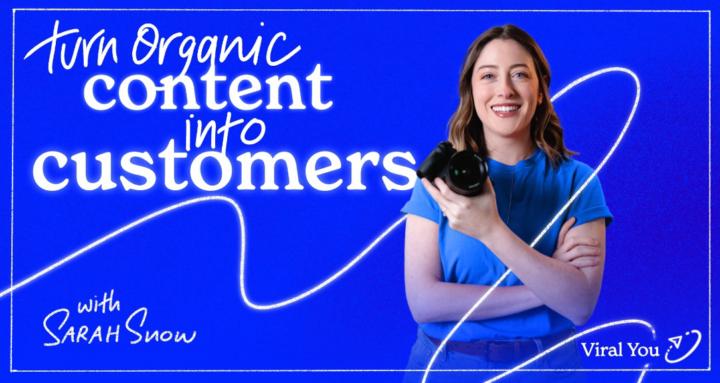
296 members · $197/month · 5.0 from 12 reviews
Viral You was one of the smallest communities in the Top 10 and had only 12 reviews, so we could read the complete set.
The consistency was striking.
The dominant themes were Sarah Snow's personal involvement and creative expertise. Reviewers talked about direct feedback, Sarah answering questions herself, live sessions, weekly Q&As and feeling personally supported.
But the subject of that support made Viral You feel very different from the AI and business communities.
The reviews repeatedly talked about storytelling, scripts, visuals, organic content and creative craft. Several members said the programme helped them create and publish more consistently.
The atmosphere of the community also came through strongly: supportive, welcoming, generous, people feeling seen and helping one another.
One member who had been paying for two months reported increasing their organic engagement by 24% after implementing the training. That's their reported result, not one we've independently verified.
At the time of the snapshot, all 12 reviewers were still paying.
That sounds impressive until you add the missing context: their membership histories were only around one to three months.
So, like AI SEO RAINMAKERS, this is strong evidence of early satisfaction — not yet evidence of long-term retention.
The clearest signal: hands-on creative feedback and founder involvement, with an unusually warm community identity — but a review history that's still too young to tell us what happens over a year.
10. Claude Code Club

8.3K members · $9/month · 4.9 from 106 reviews
Claude Code Club may have been the most useful review set in the Top 10 precisely because not everybody said the same thing.
The positive pattern was clear.
Reviewers frequently praised its beginner-friendly, step-by-step approach and the way it helped people actually build things instead of drowning in AI-tool information.
One reviewer said that after seriously following the training for a week, they had rebuilt their website, created an email strategy and avoided £500 in hosting costs. An experienced AI marketer described the programme as useful for cutting through tool overload and focusing on what mattered.
Value for money also appeared repeatedly.
But there was meaningful criticism.
One former member thought the community was good for beginners but lacked enough engagement among people doing more substantial work. That reviewer also questioned marketing they said had suggested the community would close or its price would change after a particular membership threshold.
That's the reviewer's account; we haven't independently verified the underlying marketing claim.
Another former member praised Duncan's teaching but described parts of the classroom material as too text-heavy and generic, saying they would have preferred more guided video and that the programme was better suited to beginners.
There was also a current member who initially felt help wasn't arriving as quickly as expected, then changed their review to five stars after the owner personally contacted and helped them.
Several former paying members appeared in the sample, including people who had paid for one, two and three months.
None of that makes Claude Code Club “bad”. What it does is make the 4.9 rating much more informative once you read underneath it.
You can see who appears to get the most value, where expectations can diverge, and where the founder's intervention changed a member's experience.
The clearest signal: accessible, practical help for people who want to start building with Claude Code, alongside some genuine questions about fit for more advanced users and the format of parts of the training.
So what were people actually paying for?
After reading hundreds of reviews, the interesting part wasn't discovering that people like “good content” or “helpful communities”.
Of course they do.
The more useful pattern was what kept appearing underneath very different products and prices.
Access to the person they joined for
Nick Saraev. Julian Goldie. Charley Tichenor. Charles Floate. Jack Roberts. Sarah Snow.
Again and again, members noticed when the person whose name, expertise or reputation attracted them to the community was actually there.
They mentioned questions being answered personally, feedback on their work, live calls, troubleshooting, personalised videos and direct interaction.
For creators thinking about building a paid Skool community, that may be one of the most interesting findings in this entire snapshot.
Members weren't only paying for information.
In many of these communities, they appeared to be paying for access, interpretation and help applying it.
A five-star rating can hide completely different stories
Eight of these ten communities had a 5.0 rating.
But those 5.0s were not remotely equivalent.
One sat on top of members who had been paying for around two years.
Another came from a review population that was almost entirely around one month old.
One was full of ecommerce members praising deep training.
Another was SAT students reporting specific score changes.
Another centred on direct creative feedback.
If we'd stopped at the star rating, we'd have missed nearly everything interesting.
Paying for a long time is useful — until it isn't
Maker School, Origins and AI Automations by Jack gave us some genuinely interesting long-duration signals.
But The 1550+ Formula showed why duration can't become a lazy quality score.
Some communities are designed around an ongoing business, skill or professional practice. Others help someone reach a defined endpoint.
A student who leaves after taking the SAT isn't necessarily a failed retention statistic.
Context matters.
Specific outcomes are more useful than vague praise — but they still aren't proof
The reviews contained first clients, retainers, ecommerce revenue, SAT score jumps, engagement growth and money reportedly saved.
Those details are useful because they tell us what members believe the community helped them accomplish.
But we deliberately haven't turned them into promises.
“I went from 1300 to 1520” is a reviewer describing their own claimed result.
“This programme will get you to 1520” would be a completely different statement.
That distinction matters, particularly when you're reading reviews of communities that teach people to make money.
And criticism made some communities easier to understand, not harder to recommend
The Claude Code Club criticism told us it may fit beginners differently from advanced builders.
The AI Profit Boardroom review about information overload told us the abundance of material can itself become a problem.
Even the positive former-member reviews were useful because they reminded us that cancelling doesn't automatically mean somebody hated the product.
The imperfect reviews often told us more than the perfect ones.
The part we'd watch next month
This is only a 15 September 2026 snapshot of what Skool Discovery was surfacing as Trending.
It isn't Skool Build's ranking of the “best” communities, and we don't know the weighting behind Skool's Trending algorithm.
But now we have something more useful than a one-off Top 10 list.
We have a baseline.
Next month's snapshot can show which communities remain, which disappear, which move, how prices and membership change, and whether today's very young review sets begin to develop genuine long-term signals.
And because we're reading what members say rather than simply copying the leaderboard, we can also watch for something more interesting:
whether the things people value inside successful Skool communities change — or whether the same patterns keep turning up.